Canadian Geese, Mallards and American Politics
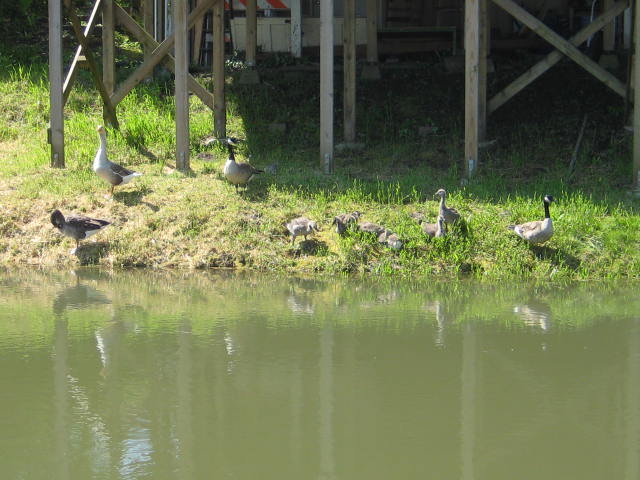
Every spring and summer, I get to watch the nesting cycles and parenting behaviors of many sets of Canadian geese and mallards.
Recently – as some young ducklings were left again alone by the adults – I was reminded that the differences between the geese and the ducks was so much like our two political parties.
The geese are protective. They work as a community to raise the goslings to adulthood. There are always two or more adults with any group of babies – throughout the cycle I see.
For example: Today I saw 2 or 3 adult geese watching the water while the almost grown goslings were eating. Other adults were watching the young.
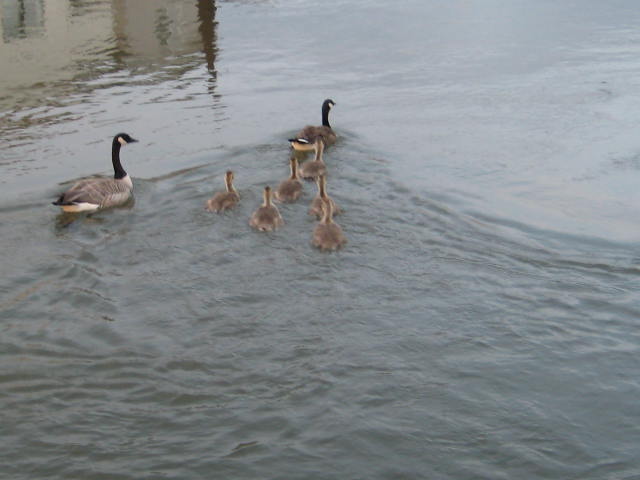
And when they swim away, one adult leads and another swims behind the goslings.
But the mallards? They protect the eggs they lay but once the ducklings hatch – they are no longer protected. There may be two adults around, but they do not watch the young. They swim away in a lead position and any duckling that does not keep up is left behind. Even if other ducks are around, the baby is totally ignored. We, the humans, seem to be the only living things that hear the cheeping.
It recently reminded me of our national political scene where one side is adamant that all human life must be born – even to mothers who do not want that child. Then, like the mallards, all concern for that life is forgotten. We cut off support, nutrition and housing. We tell the parents that they are on their own. Like the mallards, we swim away and ignore the consequences.
The other side is more like the geese. They know it takes a community to protect, care for and raise the young. They offer food and shelter and swim with the young through to adulthood.
Are you a goose? Or a duck?
Comments? Thank you.